Roots & Wings Mental Health Fitness for Families
Building Roots for Wings to Unfold
Author: admin
-

The Parenting Contradiction: From Correction to Supported Independence Many of us were raised to believe good parenting means catching mistakes quickly correcting, reminding, directing. But the more we manage every moment, the fewer chances children have for supported independence and to practice the skills we hope they’ll carry for life: self-regulation, problem-solving and emotional flexibility.…
-

Why Big Feelings Aren’t Bad Behaviour Understanding Emotional Outbursts Through a Developmental Lens As children, we didn’t have control over our emotional experiences. Many of us were taught, by well‑meaning parents—to manage, suppress, or “control” our feelings rather than understand them. These approaches weren’t rooted in harm; they reflected the limited understanding we had about…
-

For decades, the “cry it out” (CIO) method clinicalized controlled crying. It has been sold to exhausted parents as a necessary rite of passage. The promise is simple: endure a few nights of heartbreak, and you will be rewarded with a child who “self-soothes.” As an early years educator with over 20 years of experience,…
-

Why Regulation/Peace/Chill Zones Support the Whole Child Many child caregivers and educators present time-out as a behaviour management strategy, an approach believed to teach children self-control by removing them from the situation. When we pause and view this practice through a developmental, relational, and regulation-based lens, a different truth emerges: isolation does not teach regulation.…
-
The concept of “Roots and Wings” is a powerful lens through which to view the development of the next generation. While the recent findings in child psychology often focus on external achievements, a deeper look at long-term well-being reveals that the most critical skill we can impart is self-connection. Building on the philosophy of grounded…
-

My recent birthday became a moment of personal reflection. For years, I’ve struggled with the day, often wanting it to pass with little notice. I observe myself caught in a deep duality: the desire for the day to simply pass, and the innate, human yearning to be recognized and celebrated. An inner truth revealed Itself…
-
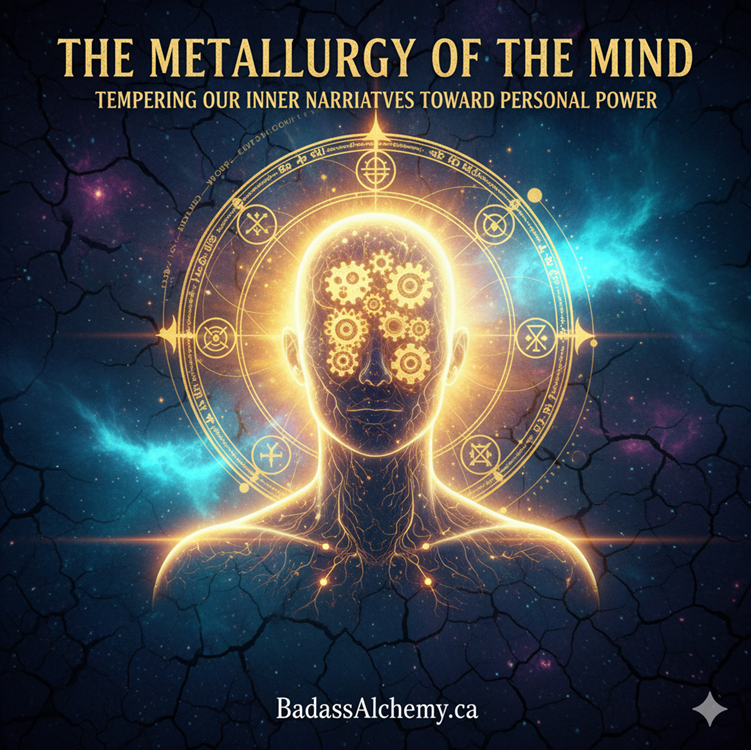
Metallurgy of the Mind: Tempering Our Inner Narratives Toward Personal Power
cognitive behaviour, cognitive distortion, emotional flexibility, false belief, fortitude, inner narratives, life coaching, mindfulness, motivation, neurodivergence, personal authority, personal growth, personal power, polyvagal, post traumatic growth, ptsd, resilience, self awareness, self help, wellbeingBy Lisa Colbert – Mental Fitness Coach @roots-wings.ca/ At Badass Alchemy, we talk a lot about transformation. We speak of forging new paths, refining our purpose, and sharpening our intuition. In that spirit, we can look to the ancient art of metallurgy for a metaphor that perfectly encapsulates the deep, often messy, and utterly divine…
-
For a long time, authenticity felt like a myth, something for others, but not for me. I saw it as some fluffy, unattainable ideal, and honestly, embracing it felt terrifying. Authenticity isn’t a destination; it’s a daily practice of self-honesty. A powerful form of personal alchemy and I know firsthand the consequences of rejecting this…
-

5 minute read It’s common for folks with ADHD, ASD and PTSD to develop coping mechanisms that can sometimes feel a little out of sync in certain interactions. Let’s explore some ways you can cultivate more mindful listening and responding. Mindful Listening Techniques Cultivate Focused Attention: Before someone starts speaking, take a conscious breath to…